
Game of War – huh… too mainstream?
Before, I’ve talked about Battleground, a miniature gaming TV show hosted by the late Edward Woodward (a miniature gamer himself) back in 1978 which was an attempt make miniature gaming more mainstream by showing a different historical battle re-enacted by wargamers each week.
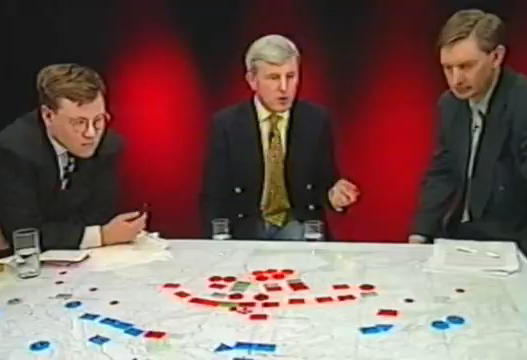
Well, in 1997, Channel Four aired three episodes of ‘Game of War’. Created by Action Time Productions (originally these were a broker for making UK versions of USA game shows, then started doing their own stuff) and hosted by Angela Rippon, well known news reporter and dancer with legs. She presented it a bit like a news report and each episode was again based on a historical battle. Each side had a former military officer as the armies general, along with a couple of advisors mostly historians or other officers. Both sides were kept separate so they could play as if on a real battle ground where they only know what is being reported to them. Each side has the messenger who takes the orders to the main game board and back again, who was also officially one of the Umpires (Paddy Griffith (expert war gamer) with Arthur Harman (also a long time name in War gaming, and I read a nice little piece he did for Miniature Wargames back in June of 2021) at the board, we have Iain Dickie giving analyst of the game each turn. Arthur Harman, as well as Umpire, was the one who was the war gamer that is meant to ‘translate’ the movements into a wargame based on one used by the military for training.
Now, when I first looked, I found a number of places (mostly wiki, so either where they nicked it from, or some people that for some reason thought wikipedia was a ‘source’ and not a starting point) that said the game they played was based on Strategos, an old war game which was used in alot of early mass-combat games like Blackmoor and later lead to Chainmail and not to be confused with the more chess like Stratego) but I’ll say this. Paddy Griffith was not only really into military history and tactics and wrote alot about it, even being a senior lecturer at RMA Sandhurst from 1973 to 1989, but he created some war games. He was a founder of both the Wargames Developments Group and the South Manchester Tactical Society (based on the Manchester Tactical Society). In 1980, he gave a conference on “New directions in wargaming” which lead to the above WDG but also lead to him working for the Ministry of Defence as a war game designer, where he helped design wargames which were used as training for Army officers. He started the still running ‘The Nugget’ WDG journal as well as being credited with developing the ‘megagame RPG system’, basically RPG games which have up to 100 players in a game, or more a series of interconnecting games. The TV show in fact used one of the games (or a version of) which he created. Was it based on inspired by Strategos? maybe, but it was one that he created for the MOD.
The Show was devised by Kevin Halloran (an expert on 10th-century history from what I can figure out, nothing to do with a exec producer with the same name) and David Stocker (no clue. Might be the Professor who was a major guy in British historic architecture and archaeologist) , with Stephen Leahy (who worked on things like the 90s British Cluedo TV series, the Wheeltappers and Shunters Social Club and The Krypton Factor among others), adapting it for TV.
Episode One was the Battle of Balaclava (1854) played by Lt. general Sir Richard Swinburn KCB (Commander of the UK field Army 1994 – 1995) with Robin Neillands and Ian Castle as the Allied army and Major General Anthony George Clifford Jones CB MC (won the Military Cross for defusing German explosives on the Nijmegen Bridge while under sniper fire during WW2 (part of Operation Market Garden)) with John Sweetman and Andy Robertshaw as the Russian army.
Episode Two was the Battle of Naseby (1645) and was between Lt. General Sir Thomas Patrick John Boyd-Carpenter KBE (Deputy Chief of the Defence Staff (Programmes and Personnel) from 1992 to 1996) with Peter Russell and Richard Holmes as the Parliamentarians, and Major General Julian Howard Atherden Thompson CB, OBE, known for commanding the 3 Commando Brigade during the Falklands War with Philip Sabin and Glenn Foard leading the Royalists.
Episode Three was the Battle of Waterloo, a common favourite, (1815) between General Sir Anthony Heritage Farrar-Hockley, who was Commander-in-chief of NATO’s Allied Forces Northern Europe (1979 to 1982) with Julian Humpheys and Peter Almond as the French forces and Lt. General Sir John Panton Kiszely KCB, MC, DL (who later was director general of the Defence Academy of the United Kingdom from 2005 to 2008) with John Tincey and Francis Tusa as the British army
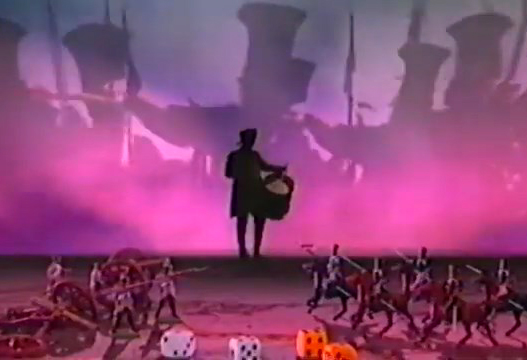
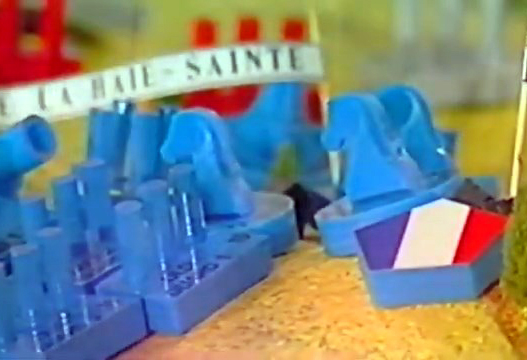
Well.. what to say about this one.. each episode was 45 min and.. well.. they try to REALLY down the wargaming side. While both Generals have a more military like overview, the full board was only seen by the host and the gamer guy which gave a better full view of the battle and was… well.. rubbish. It was a very bare down topological map with bright plastic tokens which even for 1978 would have looked bland, but you can kinda see why they used mass produced tokens.
The problem is, this appears to be an attempt to correct the problem with Battleground, and make it more ‘action packed’ but this was lead to removing soo much of the appeal of the original show. Higher production values replaced nicely painted miniatures. While you could say they focused more on the tactics with each general having 2 advisors as well as commutation with the messenger but this in fact removed alot of the tactics or atleast being displayed to the viewer, and you just got alot of back chat about the more real war issues with officers not following orders, and stuff. While I did say the battleground was too laid back for the average viewer, so would get bored, this tries to fix that by adding style over substance, making it kinda worse. Miniature people would be turned off by the dull tokens and bare stripped down terrain, gamers have none of the game really on display as the details as even more hidden then they were with Battlegrounds (again, I said I would have preferred it having a bit more focus on the rules so you could follow along with them more).
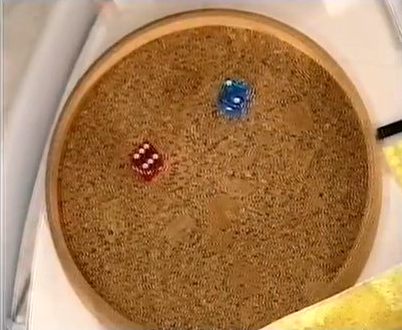
Also, while I’m not up on the rules of the game being played, there does seam to be a great bit of ‘random events’ (in the first episode, the one commander refuses to obey orders and the ‘general’ has him arrested and someone else take command of the regiment) each combat clash is just 1 dice roll of 2 D6 which decides alot. It’s a bit iffy really. While they talk about how well trained the troops are, which you would think a highly trained regiment would have higher ‘values’ but.. well, if this is the case, it’s very hard to tell due to the lack of explaining stuff (which Edward Woodward gave a much better job at doing) and just the single one roll does plenty but rarely given much information on what the dice roll is even about. I think they appear to use one D6 each, so they roll the two die and there MIGHT be a modifier but.. it’s far from clear as they want to make the war gaming side of things very much the hidden background. That said, the 45 min (Commercial hour, as with the adverts, that makes it an hour long show) is a bit better than the half hour of battleground, which was a bit short.
Reviews from the time don’t appear to have been that much different from my own views and the show didn’t go past them 3 initial episodes. Angela Rippon does a fair enough job as host, but there are too many people. Where in Battleground you have the host (who also explains and narrates events), then you have the two players, in this you have 3 ‘players’ on each side, the two umpires (one carrying the messages, one doing the rolls and deciding things), the host AND a game commentator. Way too many. Why not just have Paddy Griffith and Arthur Harman play against each other. Iain Dickie is pretty useless, and in fact episode two improves Griffith and Harman explaining bits on why to do the role and what it is for, even going into how the real world elements would fit into gaming mechanics, a bit. It would lose the ‘fog of war’ things where the two ‘generals’ only know what they would know in real life (like if they can’t see the unit, they don’t know where it is) but that is something alot of miniature wargames have to do without (some miniature board games can keep it, but only when you have a dungeon master really), but it would make a much better show I think.
Still.. I kinda have to compare it to battleground, which I have done a lot, and it just pales compared to it, despite the higher production values. Really a let down. Kinda worth watching but you will be disappointed. I must admit, episode two is far better than episode one, as it does in fact feature some game play! yay! and episode three? well, they are starting to get even better. I think the game is a bit duller for people which is why they added more like explaining how the dice work but it is something that should have been there from the start.
As hinted by the title of this post, I think they really tried to, unlike Battlegrounds (yep, comparing again) down the miniature side and hyped up the ‘tension’ in order to make it far more mainstream. It’s what they love to do with sports programs, and why they stopped showing things like Chess matches on TV so much.. while there is alot of tension, it’s too slow a game to watch for the average person to want to tuned into. I will say that Angela Rippon did appear to enjoy herself and tried her best (it appears) to ask the right questions to get stuff explained but she is kinda fighting a losing battle with the show’s format.
At the time, Action Time Productions was owned but worked semi-independently from Carlton Television, but then in 2004 the Merger between Carlton and Granada folded it back Granada before that was retired to create ITV Global Entertainment.
